Haridwar Real Estate Forecast 2026–2035: Why Haridwar Could Become Uttarakhand’s Next Property Growth Hub
A holy city on the Ganga is turning into one of North India’s more closely watched residential markets. Here’s what’s actually driving it, and what buyers should check before they commit.
For most of its history, Haridwar has meant one thing above all: faith. People come for the evening Ganga aarti at Har Ki Pauri, for the Kumbh Mela, for a dip in water believed to wash away a lifetime of sin. Real estate was never really part of that story. That’s starting to change. In April 2026, the Delhi–Dehradun Expressway opened to the public, and Haridwar got its own dedicated six-lane link to Delhi as part of it, cutting a drive that once ate up the better part of a day down to a few hours. Around the same time, work moved forward on the Haridwar–Rishikesh Ganga Corridor, a riverfront and Har Ki Pauri-area redevelopment modelled on the Kashi Vishwanath corridor in Varanasi. Add an established industrial base, a fast-growing wellness economy, and steady interest from Delhi NCR buyers priced out of their own city, and Haridwar starts to look less like a pilgrimage stop and more like a city entering its own property growth cycle.
This piece looks at what’s actually behind that shift, what the 2026–2035 decade could realistically look like for Haridwar’s residential market, and what to check before putting money down.
Haridwar at a Glance (2026)
| Metric | Detail |
|---|---|
| Distance from Delhi | ~210 km via the Delhi–Dehradun Expressway |
| New drive time from Delhi | ~2.5–3 hours, down from 6+ hours |
| Dedicated Haridwar link | Saharanpur–Roorkee–Haridwar Expressway (~50 km, 6-lane) |
| Industrial base | SIDCUL estate — 100+ registered units (pharma, engineering, chemicals, textiles) plus BHEL |
| Nearby institutions | AIIMS Rishikesh, Patanjali Yogpeeth |
| Ongoing redevelopment | Haridwar–Rishikesh Ganga Corridor (riverfront, Har Ki Pauri area) |
| Planned rail transit | Haridwar–Rishikesh–Dehradun corridor (~73 km, state-approved) |
Haridwar Real Estate Market Outlook: 2026–2035
Five forces are shaping where this market goes next:
Connectivity
New expressway and highway links to Delhi NCR and the hill towns.
Tourism
A growing base of pilgrims, wellness travellers, and weekend visitors.
Industry
A manufacturing and pharma base that anchors demand beyond the tourist season.
Planned communities
Rising demand for gated townships over unplanned colonies.
Lifestyle migration
Retirees, remote workers, and families choosing Haridwar over louder, costlier cities.
Compared with Delhi, Gurugram, or even Dehradun, where prices have already climbed well past what a first-time buyer or retiree can comfortably manage, Haridwar is still a market where land and plots are attainable. That gap, more than any single project, is what’s pulling outside money in.
1. Infrastructure: The Expressway Changes the Math
Infrastructure is usually the slowest-moving input into a real estate story. Roads take years to build, and buyers tend to believe in them only once they’re actually driving on them. Haridwar just got that proof.
The Delhi–Dehradun Expressway — a roughly 210-km, six-lane NHAI corridor built at a cost of around ₹12,000 crore — was inaugurated in April 2026, bringing travel time between Delhi and Dehradun down from six-plus hours to roughly two-and-a-half to three. Crucially for Haridwar, the project includes a dedicated spur, the Saharanpur–Roorkee–Haridwar link, running about 50 km of six-lane highway. That means Haridwar isn’t just a stop on the way to Dehradun anymore; it has its own fast, direct connection to the capital.
Layer on a planned rail-based transit corridor between Haridwar, Rishikesh, and Dehradun (roughly 73 km in total, approved by the state government, with the ~32-km Haridwar–Rishikesh stretch as its first phase) along with ongoing city road widening, and the direction is clear: Haridwar is being pulled into Delhi NCR’s weekending and commuting radius in a way it never was before.
For buyers, this matters more than it might seem. Land near expressway access points and along the NH-334 corridor is typically first in line as improved access turns into improved demand.
2. Haridwar Is Outgrowing Its “Pilgrimage-Only” Identity
Haridwar’s religious identity isn’t going anywhere, nor should it. But the city’s economy is no longer built on pilgrimage alone. Three groups are changing who actually lives here:
Wellness and Ayurveda travellers. Yoga retreats, Ayurvedic centres, and wellness-focused tourism, much of it anchored around institutions like Patanjali’s campus, have turned the Haridwar–Rishikesh belt into one of India’s better-known wellness corridors. That’s starting to translate into demand for longer stays and second homes, not just weekend visits.
Healthcare-driven migration. AIIMS Rishikesh, a short drive away, has pulled doctors, hospital staff, and allied healthcare businesses into the wider Haridwar–Rishikesh corridor, adding working professionals whose housing needs have nothing to do with tourism.
Retirees and lifestyle buyers. Cleaner air, a slower pace, and proximity to the Ganga are pulling retirees and remote-working families away from Delhi NCR’s congestion, a pattern showing up across several spiritual and hill-adjacent towns in North India right now.
3. Industrial Growth Gives the Market a Non-Tourist Foundation
A market driven only by tourism tends to be seasonal: busy during Kumbh years and major festivals, quieter otherwise. Haridwar’s industrial base is what keeps demand steadier the rest of the time.
The SIDCUL (State Infrastructure and Industrial Development Corporation of Uttarakhand) estate in Haridwar is home to well over a hundred registered units spanning pharmaceuticals, auto components, engineering, chemicals, textiles, and packaging, alongside long-established anchors like BHEL’s Haridwar plant, one of India’s largest power-equipment manufacturing complexes. That base translates directly into rental demand, workforce housing, and steady end-user buying — the kind of demand that holds up even when tourist footfall dips.
Land within reasonable commuting distance of these industrial zones tends to hold its value better than purely speculative plots, for a simple reason: there’s always someone who needs to live near their job.
4. Why Residential Plots Are Gaining Ground Over Built Units
A growing share of buyers, especially those buying for the long term, are choosing plots over ready-built flats. A few reasons keep coming up:
Build on your own terms. A plot lets a family design the home around its actual needs and timeline, instead of buying into someone else’s floor plan.
Land appreciates, and land also runs out. As Haridwar’s urban footprint expands, well-located plots get harder to find, which is exactly the kind of scarcity that tends to support long-term price growth.
Lower carrying cost before construction. An empty plot is cheaper to hold and maintain than a finished structure, which matters for buyers planning to build years down the line.
A head start on the family home. Many buyers are purchasing now specifically to lock in the option to build before prices move further.
5. Gated Townships Are Becoming the Default, Not the Upgrade
Buyers today aren’t just shopping for land; they’re shopping for an entire living environment: security, green space, planned roads, and some sense of community, not just four boundary walls.
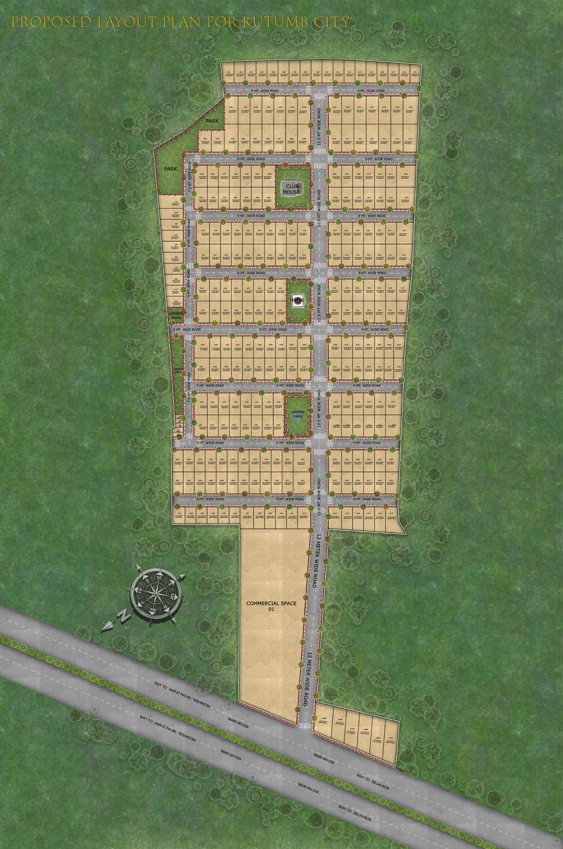
That shift is why township-style developments are gaining ground over standalone, unplanned plotting colonies. Projects like Kutumb City Haridwar, positioned along the NH-334 corridor, are built around this preference, combining individual residential plots with the infrastructure, security, and shared spaces of a planned township rather than leaving buyers to build in isolation.
6. Why Delhi NCR Buyers Keep Looking at Haridwar
Delhi NCR’s own real estate has priced out a large share of buyers who’d still like a home with cleaner air and a calmer pace of life. Haridwar’s pitch to that buyer is fairly direct:
- Lower congestion and better air quality than Delhi, Noida, or Gurugram
- A now-realistic 2.5–3 hour drive on the new expressway, instead of a half-day trip
- Entry prices well below comparable land in Delhi NCR, and often below Dehradun too
- A genuine spiritual and cultural pull that a flat in a generic NCR suburb simply doesn’t offer
For many of these buyers, Haridwar isn’t a primary residence. It’s a second home, a retirement plan, or a long-horizon investment they’re comfortable holding for a decade.
7. What to Expect in Haridwar Real Estate: 2026–2035
Planned townships will pull ahead of unplanned colonies. Buyers increasingly prefer developments with clear layouts, defined amenities, and proper registration over informal plotting.
Land near the new connectivity corridors will move first. Expect the sharpest early demand around the expressway spur, the NH-334 stretch, and the areas benefiting from the Ganga Corridor redevelopment.
“Green and open” becomes a selling point, not a footnote. As nearby hill towns get more crowded, open space and lower density will do more of the marketing work.
More buyers will treat Haridwar as a portfolio decision. Expect a rising share of purely investment-driven buyers alongside the end-users, retirees, and second-home seekers already in the market.
- Location and access — Look past the marketing map. Check actual road access, true distance to the expressway or NH-334, and how far the plot really is from the landmarks used to sell it.
- Legal and regulatory approvals — Confirm RERA registration, Haridwar Development Authority (HDA) layout approval, a clear and encumbrance-free title, and that the land-use classification actually permits residential construction.
- Developer track record — Look for a history of delivered, not just announced, projects, transparent pricing, and paperwork that matches what’s being promised verbally.
- Livability, not just appreciation — Water supply, drainage, road width, and proximity to daily-use facilities matter as much as the price chart.
Is Haridwar Real Estate Actually a Good Investment for 2026–2035?
No one can promise future returns in real estate, and Haridwar is no exception. It’s still a developing market, not an established one, and that comes with more upside and more uncertainty than buying into a mature city.
What Haridwar does have going for it is a fairly rare combination for this stage of a market: a tangible, dated infrastructure upgrade (the expressway is open, not just promised), an industrial employment base that isn’t dependent on tourism, an expanding wellness and healthcare economy, and prices that still have room to move before they catch up with Dehradun or Rishikesh. That combination looks more like what usually precedes a long, sustained growth cycle than a short-term spike, though it’s not a guarantee of one.
The honest takeaway: this looks like a market worth a long-term horizon and careful diligence, not a guaranteed win, and not something to buy into without checking the paperwork.
Kutumb City Haridwar: A Planned Township for This Moment
Everything driving Haridwar’s market right now — better connectivity, rising demand for planned communities, and buyers who want land with real infrastructure around it — is the gap Kutumb City Haridwar is positioned to fill.
Located along the NH-334 corridor, the township combines individual residential plots with the planning, security, and common infrastructure of an organised community, rather than leaving buyers to build in isolation on an unserviced plot. For a buyer weighing a standalone plot against a township, that’s the core trade-off: more structure and shared amenities, in exchange for buying into a developer’s master plan instead of a blank piece of land.
As with any project in a market moving this fast, the checklist above still applies here. Confirm RERA registration, HDA layout approval, and clear title documents directly with the developer before booking. A location on a well-connected corridor and a planned layout are meaningful advantages, but they’re worth confirming on paper, not just in a brochure.
Frequently Asked Questions
Is Haridwar a good place to buy property in 2026?
It’s a developing market with solid infrastructure momentum behind it: the new expressway, the Ganga Corridor redevelopment, and an established industrial base. It isn’t a sure thing, though. Treat it as a long-term, do-your-diligence investment rather than a guaranteed quick return.
How has the Delhi–Dehradun Expressway changed Haridwar’s outlook?
It gave the city a dedicated six-lane link to Delhi and cut travel time to roughly 2.5–3 hours, putting Haridwar within genuine weekend and second-home range of Delhi NCR for the first time.
Are plots a better investment than flats in Haridwar?
Plots offer more flexibility, typically lower upfront maintenance, and let buyers build on their own timeline. Flats offer faster move-in with less hands-on effort. The right choice depends on whether you plan to build soon or hold for the long term.
What documents should I check before buying a plot in Haridwar?
At minimum: RERA registration, HDA layout approval, an encumbrance-free title, and confirmation that the land-use classification permits residential construction. Ask to see these directly rather than relying on a brochure.
Why are gated townships becoming more popular than standalone plots?
Buyers increasingly want security, planned roads, green space, and a defined community, not just land. Township developments bundle that in, which is why they’re outpacing unplanned plotting colonies in buyer interest.
Conclusion
Haridwar’s next decade doesn’t hinge on a single project or a single road. But for the first time, the city has the infrastructure, the industrial base, and the buyer interest lining up at the same time. The 2026–2035 window looks like the period where that alignment either turns into sustained, well-planned growth, or gets crowded out by the same unplanned development that’s hurt other fast-growing hill towns.
For buyers, that makes the fundamentals worth taking seriously: connectivity, legal clarity, developer track record, and actual livability, not just a good story. Get those right, and Haridwar offers something genuinely hard to find this close to Delhi NCR: real room to grow, at a price that hasn’t caught up yet.
Exploring Land in Haridwar?
See how Kutumb City Haridwar’s planned township along the NH-334 corridor fits into this decade’s growth story — and confirm the approvals and paperwork before you book.